
Vanilla Grades Explained: A, B, Gourmet — How to Make Sense of Them
Introduction
In the vanilla market, the terms “Grade A”, “Grade B” and “Gourmet” come up constantly, but their meaning often remains unclear to the uninitiated. Here’s what they actually mean.
Grade A (Gourmet, Prime)
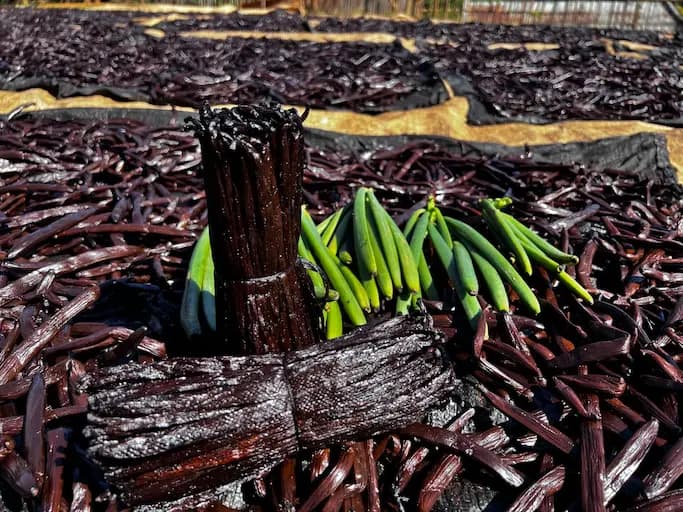
This refers to plump, supple, glossy pods, with optimal moisture content (around 30 to 35%) and a high vanillin level. These are the pods meant to be used whole, split and scraped: fine pastry, infusions, presentation. Their appearance matters as much as their aroma.
Grade B (extraction)
Less plump, sometimes drier or slightly split, Grade B pods are no less aromatic: their vanillin content can even be comparable to Grade A. They’re mainly intended for making extracts, where appearance matters little since the pod is infused and then removed.
The technical criteria that define a grade
- Pod length
- Moisture content
- Vanillin content
- Suppleness and physical integrity
- Average weight per pod
- Fragrance intensity
Which grade to choose for your use?
For a use where the pod stays visible or whole (crème brûlée, infusion, decoration), choose Grade A. For use exclusively in extraction (homemade extract, flavouring, spiced rum), Grade B offers excellent value for money.
Conclusion
Grade isn’t a guarantee of absolute aromatic quality, but an indicator of the pod’s intended use. Chosen well, it helps optimise both the result in the kitchen and your budget.